


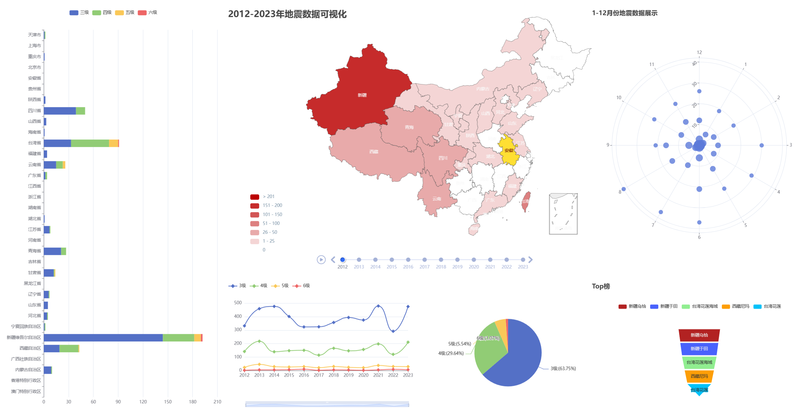
本系统利用Spark平台对Python 爬取的地震数据进行实时分析,使用Pandas对历史地震数据进行离线分析,并通过Django作为前端框架和ECharts进行可视化展示的方法。其次,我们采用Python编写爬虫程序从地震监测站获取地震数据,使用Spark SQL对数据进行分析。同时,我们还使用Pandas对历史地震数据进行深入分析,包括地震强度、深度等指标的综合分析,并对地震活动进行可视化展示,以便更好地理解地震趋势和规律。


点击空白处退出提示



本系统利用Spark平台对Python 爬取的地震数据进行实时分析,使用Pandas对历史地震数据进行离线分析,并通过Django作为前端框架和ECharts进行可视化展示的方法。其次,我们采用Python编写爬虫程序从地震监测站获取地震数据,使用Spark SQL对数据进行分析。同时,我们还使用Pandas对历史地震数据进行深入分析,包括地震强度、深度等指标的综合分析,并对地震活动进行可视化展示,以便更好地理解地震趋势和规律。
This system integrates Flask framework and Spark big data processing technology to
achieve efficient processing and analysis of earthquake data. Firstly, it combines Echarts
visualisation library and uses Layui for template rendering to analyse the offline data big
screen. Secondly use JS and JQuery library, introduce Baidu map API, use Ajax method to
achieve dynamic interaction of data, and obtain seismic parameters in real time. Finally
this system will use machine learning algorithm (Random Forest) to train the seismic
dataset and predict the risk of earthquake occurrence by determining the accuracy through
the confusion matrix and accuracy score of the algorithmic model.
本系统融合了Flask框架与Spark大数据处理技术,实现对地震数据的高效处理
与分析。首先结合Echarts 可视化库,利用Layui 进行模板渲染,对离线数据大屏进
行分析。其次使用JS和JQuery库,引入百度地图API,利用Ajax方法实现数据的
动态交互,实时获取地震参数。最后本系统将使用机器学习算法(随机森林)对地震
数据集进行训练,通过算法模型的混淆矩阵和准确性评分来确定准确率,对地震发生
风险进行预测。


评论